
How to Turn Your Selfie Into a Viral AI Miniature Diorama Tiny-World Portrait in 2026
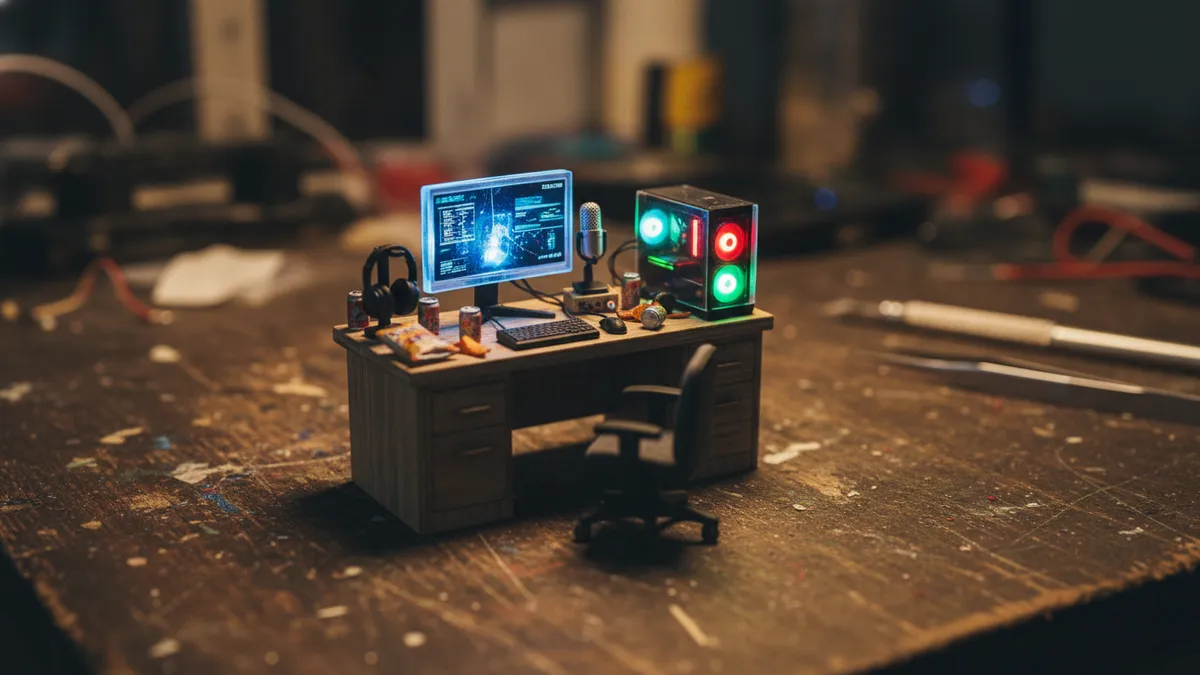
Picture this: a thumbnail-sized version of you hunched over a glowing gaming rig, every LED reflection caught in the resin-like sheen of a miniature desk. The camera sits inches away. Bokeh swallows the background into creamy nothing. Your followers stop mid-scroll because their brain screams that's a real model kit — except the figurine has your actual face, your actual hoodie, your actual posture. This is the tiny-world AI diorama portrait, and it is the dominant aesthetic trend reshaping profile content across TikTok and Instagram in 2026.
Unlike the action-figure box trend that peaked last year — static, packaging-focused, novelty-first — this one demands craft. You are placing a living, breathing version of yourself inside a handbuilt miniature scene with macro photography lighting, shallow depth of field, and the unmistakable texture of tilt-shift photography. The results look like something a professional model-maker spent weeks assembling. The process takes minutes.
Why the Tiny-World Diorama Trend Hits Different
The mechanic is simple but the psychology runs deep. Miniature scenes trigger a specific emotional response — warmth, wonder, the urge to lean closer. Researchers call it the "overview effect in reverse." Instead of feeling small looking at something vast, you feel protective looking at something small. When that something small is you, the parasocial hook doubles.
Tilt-shift AI portraits also solve a persistent content problem. Standard AI headshots feel sterile. Action-figure boxes feel gimmicky after the third one. But a tiny-world diorama gives context, narrative, and atmosphere in a single frame. Your audience doesn't just see your face — they see your world, shrunk to fit in their palm.
The trend is accelerating because the tools finally caught up. Gemini Nano Banana handles photorealistic scene construction with frightening accuracy. ChatGPT's image generation now nails macro-lens distortion on the first pass. And animation tools like Kling AI turn static dioramas into looping clips that rack up watch time. The full pipeline exists. You just need to know how to use it.
The Foundation: What Makes a Convincing AI Miniature Diorama Selfie
Before you touch a prompt, understand what your eye expects from a real tilt-shift miniature photograph. Three elements sell the illusion every time.
Scale cues. Oversized texture grain on surfaces. Visible brush strokes on painted walls. Slightly imperfect seams where pieces join. The AI needs to render your scene as if it were built from balsa wood, resin, and acrylic paint at 1:24 scale.
Lens behavior. Aggressive shallow depth of field. The focal plane should be razor-thin — your figurine sharp, the foreground and background melting into gaussian blur. This is tilt-shift's signature and the single biggest tell between amateur attempts and scroll-stopping results.
Lighting temperature. Real diorama photographers use warm directional light to simulate golden-hour miniatures. Cool overheads flatten the scene and kill the magic. Your prompt needs to specify this or the AI defaults to flat studio lighting every time.
Your Source Photo: What Works and What Doesn't
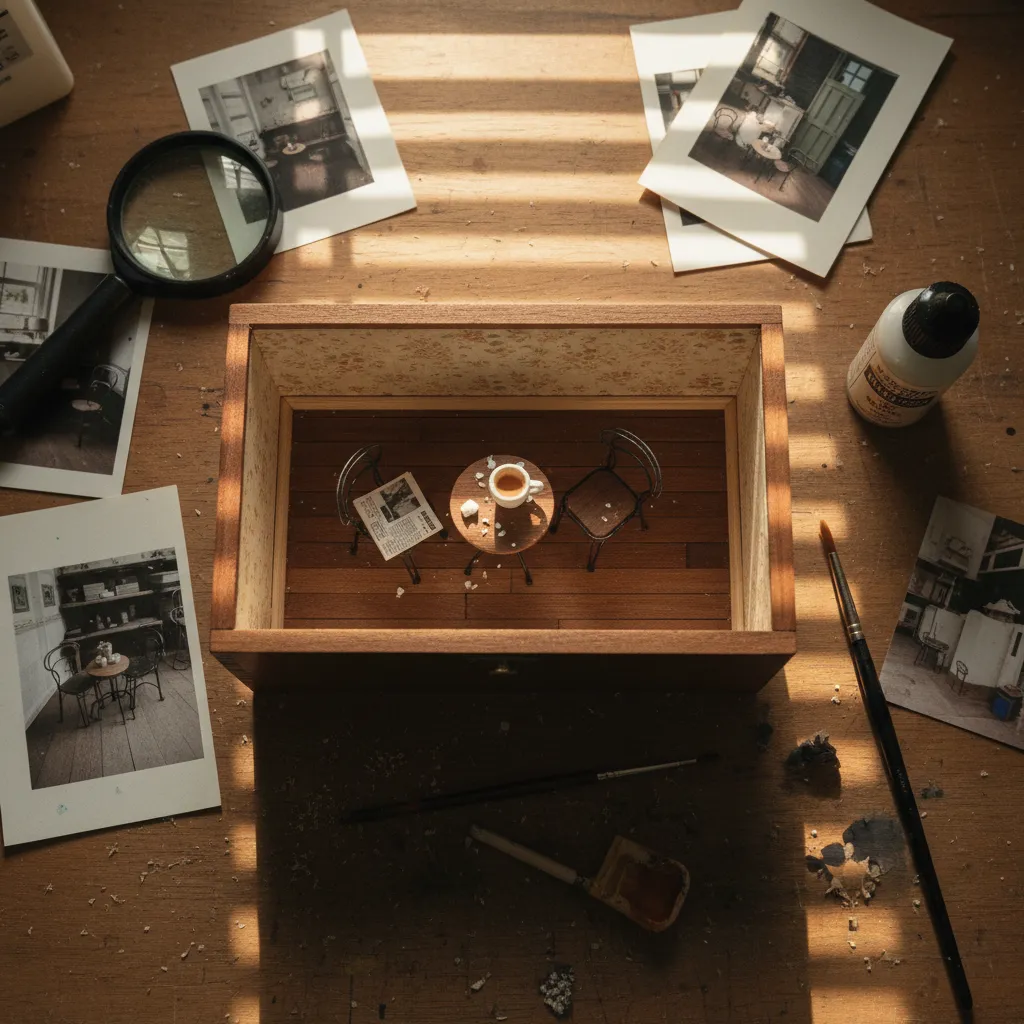
The AI needs a clear reference of your face and body to place you convincingly inside a scene. A straight-on selfie with decent lighting works. A dimly lit mirror photo with half your face in shadow does not. Wear something with texture — knit sweaters, denim jackets, graphic tees — because smooth fabrics lose detail at miniature scale and the figurine version of you ends up looking like a mannequin.
At PixViva, we've found that AI-enhanced portraits make the strongest source material for diorama generation. A clean, well-lit headshot with sharp features gives the AI everything it needs to render your likeness at thumbnail scale without losing your identity. If your selfie game is inconsistent, start there.
8 Themed Diorama Prompts That Actually Work
Every prompt below follows the same architecture: scene description, scale instruction, lens specification, lighting direction, and material texture call-outs. This structure is not optional. Skip any element and the output drifts from "handcrafted diorama" into "weird small person in a room."
1. The Gaming Desk Setup
"Tilt-shift macro photograph of a miniature 1:24 scale diorama scene. A tiny realistic figurine resembling [describe yourself] sits at a detailed gaming desk with glowing RGB monitors, miniature headphones, and a tiny mechanical keyboard. Resin-cast furniture, hand-painted details, visible wood grain on the desk. Warm LED glow from screens. Shallow depth of field, f/1.4 macro lens, bokeh background. Professional studio lighting from upper left."
2. The Botanical Greenhouse
"Tilt-shift macro photograph of a miniature diorama greenhouse. A small figurine resembling [describe yourself] tends to tiny potted plants on wooden shelves. Condensation on glass panes, moss textures on terracotta pots, visible brush strokes on painted metal frame. Soft diffused natural light through frosted glass. 1:24 scale, f/1.4 macro lens, extremely shallow depth of field."
3. The Neon City Rooftop
"Tilt-shift macro photo of a miniature cyberpunk rooftop diorama at night. A tiny figurine resembling [describe yourself] leans against a railing overlooking a miniature neon-lit cityscape. Wet surface reflections, hand-painted signs in Japanese, tiny string lights. Cool blue and magenta lighting. 1:24 scale resin model, f/1.4 macro lens, heavy bokeh on city lights below."
4. The Cozy Reading Nook
"Tilt-shift macro photograph of a miniature autumn reading nook diorama. A figurine resembling [describe yourself] curls up in a tiny armchair with a miniature book. Knitted blanket texture, hand-painted mug of tea with steam effect, miniature bookshelf with individual spines. Warm golden-hour side lighting, 1:24 scale, f/1.4, shallow depth of field."
5. The Sci-Fi Laboratory
"Tilt-shift macro photo of a miniature sci-fi research lab diorama. A figurine resembling [describe yourself] examines a glowing specimen on a tiny workbench. Holographic screens made from resin, bubbling test tubes, exposed wiring. Cool clinical overhead light mixed with green specimen glow. 1:24 scale, f/1.4 macro lens, extremely shallow depth of field."
6. The Record Store
"Tilt-shift macro photograph of a miniature vintage record shop diorama. A figurine resembling [describe yourself] flips through tiny vinyl crates. Hand-painted album covers, warm Edison bulb lighting, exposed brick texture on walls, wooden floor with visible grain. 1:24 scale, f/1.4, bokeh on background shelves."
7. The Mountain Camp
"Tilt-shift macro photo of a miniature wilderness campsite diorama. A figurine resembling [describe yourself] sits beside a tiny campfire with realistic LED glow. Miniature tent, pine trees made from dried moss, starry sky backdrop painted on curved surface. Warm firelight, 1:24 scale, f/1.4 macro lens, shallow depth of field."
8. The Tattoo Studio
"Tilt-shift macro photograph of a miniature tattoo parlor diorama. A figurine resembling [describe yourself] works at a tiny tattoo station. Flash art sheets on walls, miniature ink bottles, vinyl chair with realistic upholstery texture. Warm overhead spotlight, neon open sign glow. 1:24 scale, f/1.4, heavy foreground bokeh."
Adapt any of these by swapping the scene but keeping the technical scaffolding intact. The scale callout, the f/1.4 specification, and the material texture descriptions do the heavy lifting.
Gemini vs. ChatGPT: Choosing Your Engine
Both tools produce strong 3D diorama portraits, but their strengths diverge in ways that matter. Gemini Nano Banana excels at environmental consistency — the scene holds together as a physical object with coherent lighting and material properties. It renders resin and wood textures with almost uncomfortable accuracy. ChatGPT's image generation produces more stylized results with punchier color grading and tends to nail facial likeness on figurines more reliably.
The practical move: use Gemini for scenes where environment detail matters most (the greenhouse, the neon rooftop) and ChatGPT for portraits where your face needs to read clearly at small scale (the reading nook, the gaming desk). Run both. Compare. The five minutes of extra generation time pays for itself in output quality.
Animating Your Diorama for TikTok With Kling AI
A static diorama portrait performs well on Instagram grids. But TikTok rewards motion, and a gently animated tiny-world scene becomes hypnotic. Kling AI handles this with a specific workflow that preserves the miniature illusion.
Upload your finished diorama image and prompt for subtle environmental animation only: flickering screen glow, drifting steam from a mug, swaying plant leaves, pulsing neon reflections. Instruct the model to keep the figurine static — this is critical. Real diorama figurines don't move. The moment your tiny self starts walking or blinking, the illusion shatters.
Set the output to a 3-5 second seamless loop. TikTok's algorithm favors loops because they inflate watch time. A viewer watches your cozy reading nook three times before they realize it's repeating. By then, the algorithm has already decided to push it further.
Common Mistakes That Kill the Miniature Illusion
The biggest failure mode is over-prompting the figurine's expression. Real miniature figurines have neutral, slightly painted-on faces. If you ask the AI for a big smile or dramatic pose, the result looks like a shrunken photograph pasted into a scene rather than a crafted model placed into one. Subtlety sells the effect.
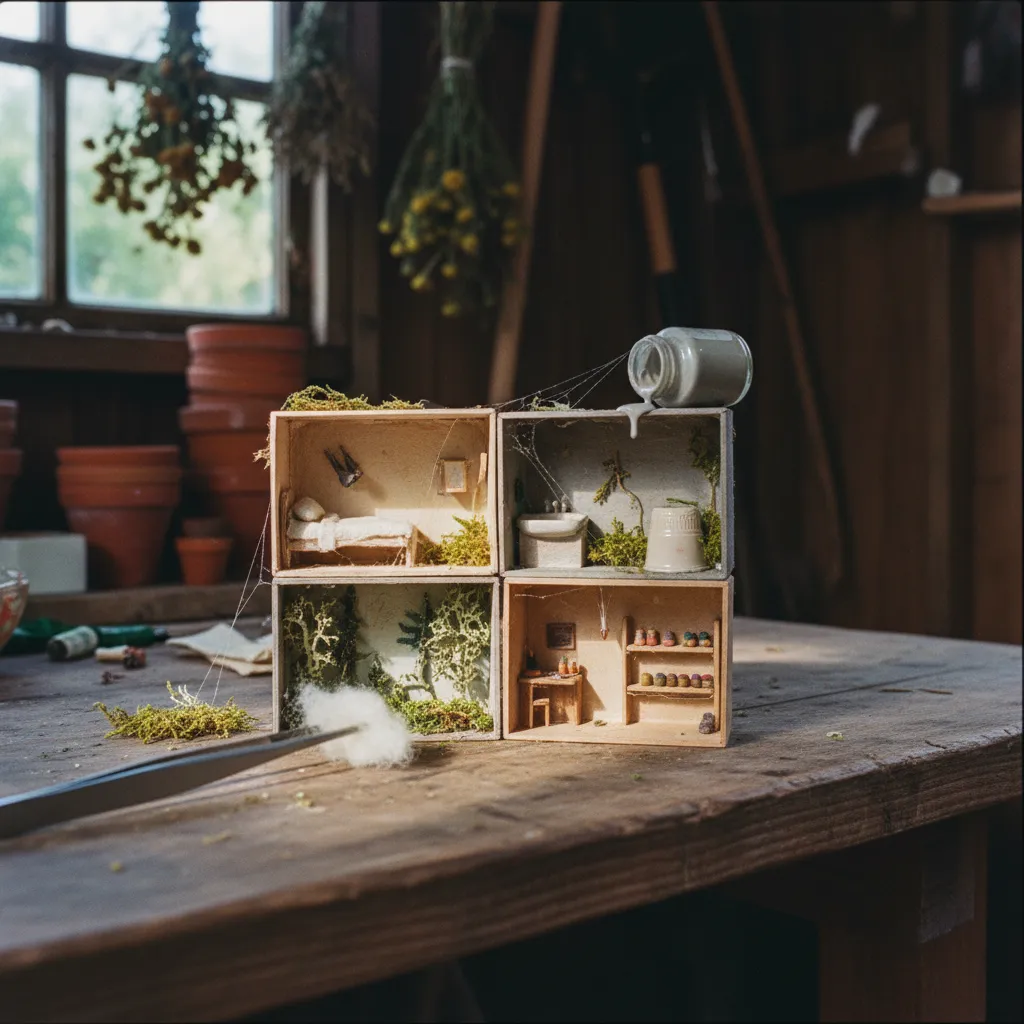
Second mistake: forgetting the base. Real dioramas sit on platforms, inside shadow boxes, or on workshop tables. Adding a visible edge — the wooden base of the diorama, a surrounding workshop surface with tools — frames the scene and screams "this is a miniature" to the viewer's brain. Without it, you're just a blurry small person in a room.
Making This Your Signature Look
The creators gaining traction with this trend aren't posting one-offs. They're building a series — same figurine version of themselves, different rooms, a whole tiny world unfolding across their grid. It becomes a visual identity. Followers start anticipating the next room reveal. That serialized approach turns a trend into a brand.
Start with a single scene that matches your existing content personality. If you post fitness content, build a miniature home gym. If you're in tech, the sci-fi lab or gaming desk makes sense. Let the diorama reflect who you already are, just smaller and more magical.
The tools exist. The prompts work. The trend is still climbing. The only variable left is whether you build your tiny world this week or watch someone else build theirs first.
Ready to see yourself in a new light?