
How to Fake a Luxury European Summer Vacation on Instagram Using AI in 2026
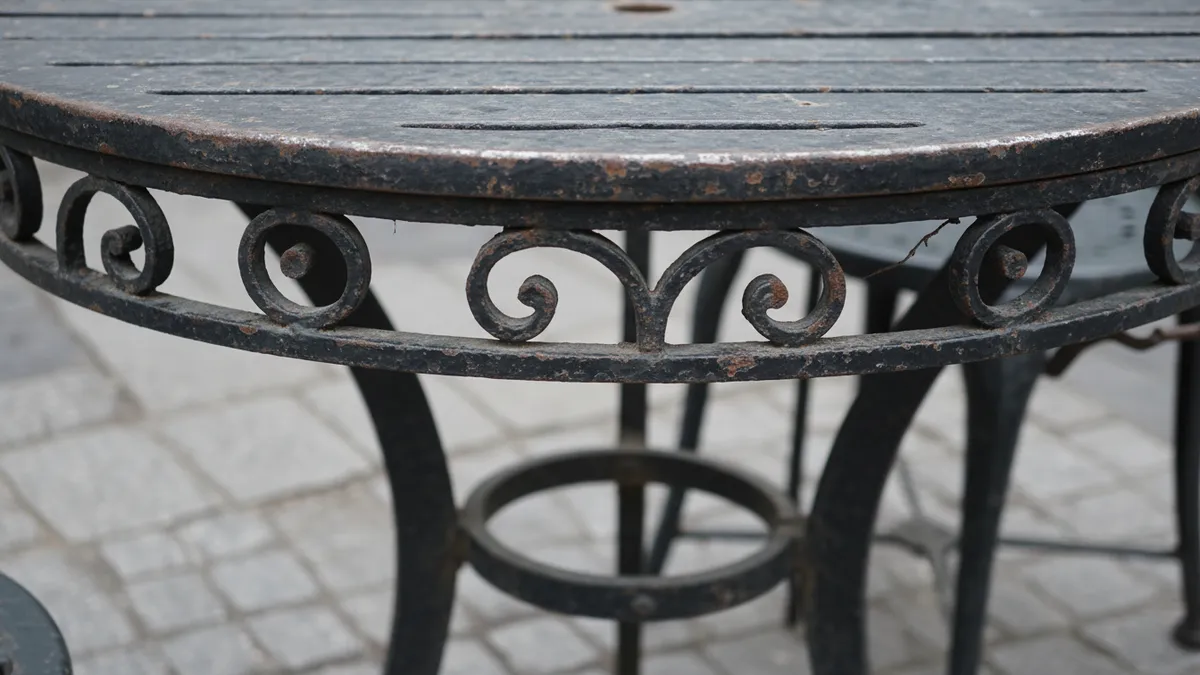
The condensation on a glass of chilled Vermentino, pooling slowly onto a wrought-iron table. The distant, rhythmic crash of the Tyrrhenian Sea against the rocks. The blinding, almost violent white of Grecian stucco under a July sun.
These are not just locations—they are sensory currencies. You want the salt-heavy breeze of the Mediterranean not just for the experience, but for the visceral proof of leisure it provides. Yet, here you are, listening to the hum of a window air conditioning unit in your bedroom.
In 2026, the European summer aesthetic is no longer strictly a geographical destination—it has evolved into a digital state of mind. Using an advanced AI travel photo generator, we are quietly bypassing the physical constraints of borders, delayed flights, and exorbitant bank account drains. We are choosing to edit a selfie into a vacation because, in our hyper-connected reality, the image of the experience has superseded the physical experience itself.
The Philosophy of the Digital Riviera
Why do we crave the Amalfi Coast or the cliffs of Santorini? Before we ask how to manipulate the pixels, we must ask why the pixels matter in the first place.
It isn’t merely about the geography—it is about the socio-economic signaling of absolute rest. To be seen lounging on a wooden Riva boat in Positano is to announce to your digital ecosystem that you have conquered the daily grind. You have ascended to a tier of existence where time and money yield to your pleasure.
But what does it actually mean when a change photo background AI democratizes that exact socio-economic signaling? It strips the exclusivity of luxury from the global elite and hands it directly to anyone with a smartphone and an internet connection. We are living in the era of the synthetic summer—where creating fake vacation photos with AI isn't an act of deception, but a radical form of aesthetic manifestation.
You aren't lying to your followers; you are projecting your highest, most rested self into the digital ether. It is a rebellion against the idea that beauty and leisure must be bought with a first-class ticket.
Escaping the Bedroom Architecture
Look closely at your bedroom wall. It is flat, structurally uninspiring, and tethered heavily to your mundane daily routine.
Now, imagine peeling that drywall away—like pulling down a cheap, painted theater backdrop—to reveal the sweeping, volcanic caldera of Santorini. This is the profound power of the modern AI travel filter TikTok users have been quietly weaponizing to build their personal brands.
We are moving far beyond the primitive, jagged edges of early green-screen technology. It’s no longer about simply pasting your poorly-lit head onto a high-resolution stock photo of the Eiffel Tower. It is about environmental relighting, intricate shadow matching, and the subtle interplay of simulated golden hour sun against your cheekbones.
The AI of 2026 understands the physical geometry of your face—and precisely how the Grecian sun should theoretically wrap around it.
The PixViva Protocol for Teleportation
So, how do we engineer this seamless illusion? The secret to a flawless digital teleportation lies entirely in the raw material you provide to the machine.
PixViva doesn’t just change photo background AI-style; it contextualizes your physical form within a new, fabricated reality. To seamlessly edit a selfie into a vacation, you must give the algorithm a fighting chance to believe you are actually there.
Shoot your base image in soft, directional light—perhaps standing near a large window—wearing something that implies motion and climate. Think flowing linen, sheer silk, or the strap of a swimsuit. When you feed this carefully curated base into PixViva, the algorithm doesn't just ruthlessly cut you out of your bedroom.
It calculates the ambient, bouncing light of the French Riviera, casting the appropriate azure and gold reflections into the very whites of your eyes.
Engineering the Perfect Prompt
The magic is in the linguistic details. You cannot simply ask the AI for "Paris."
Paris is a city; you need to ask for a mood. Prompt the AI with sensory-rich descriptions: "Sitting at a woven rattan chair outside a Parisian café, blurred Haussmann architecture in the background, soft morning sunlight filtering through green awning fabric."
Consider the difference between typing "beach in Greece" and typing "Overlooking the Aegean sea from a whitewashed balcony in Oia, vibrant bougainvillea framing the shot, harsh midday Mediterranean sun casting sharp shadows." The former gives you a generic, soulless wallpaper. The latter gives you a lived-in reality.
PixViva thrives on this level of granular detail. It wants to know the texture of the wall behind you. It wants to know the exact time of day. When you master this level of prompt engineering, you are no longer just editing a photo; you are writing the code for your own alternate reality.
The Psychology of 'Fake It Till You Make It'
There is a profound psychological phenomenon that occurs when you see yourself inhabiting a space of pure luxury. It is not just about tricking your audience—it is about tricking your own subconscious.
When you edit a selfie into a vacation, you are visualizing a reality that you are actively moving toward. Sports psychologists call this visualization; social media influencers call it manifesting. Seeing yourself bathed in the golden hour light of the Amalfi Coast, courtesy of PixViva, alters your internal self-perception.
You begin to carry yourself differently in your daily life. You adopt the relaxed, untouchable aura of someone who summers in Europe, even if your physical body is currently riding the subway to a nine-to-five job. The AI travel photo generator becomes a mirror reflecting not who you are, but who you are becoming.
This isn't just about impressing strangers on the internet—though, let's be honest, that is a highly satisfying byproduct. It is about cognitive reframing. When you consistently see yourself occupying spaces of wealth, leisure, and beauty, your brain begins to normalize those environments.
The Evolution of the Digital Hoax
Let us zoom out for a moment and look at the timeline of digital manipulation.
In the early 2010s, faking a vacation meant awkwardly photoshopping your body in front of the Leaning Tower of Pisa. The lighting was wrong, the shadows fell in opposite directions, and the entire endeavor screamed of desperation. It was a punchline.
Then came the era of the deceptive crop—taking a photo at a local botanical garden and tagging it as Bali. But in 2026, the landscape of illusion has fundamentally shifted.
The change photo background AI models have consumed millions of images of the European summer aesthetic. They understand the specific atmospheric haze of a Parisian morning versus the crisp, high-contrast glare of a Mykonos afternoon. When you use these tools, you are not pasting a sticker on a background.
You are mathematically rendering a new reality from the ground up, pixel by pixel, until the line between truth and generation is entirely obliterated.
The Micro-Trends of Synthetic Travel
Within this new paradigm, micro-trends have begun to emerge. We are seeing the rise of the "transit flex"—using AI to generate photos of oneself in the first-class cabin of a transatlantic flight.
Why? Because the journey has become as much of a status symbol as the destination. PixViva excels at these tight, atmospheric shots. You can generate the soft, diffused light of a luxury cabin window, complete with a crystal glass of champagne resting on the tray table beside you.
Another trend is the "accidental candid," where the AI travel filter TikTok creators use is designed to look like a friend snapped a quick, blurry photo of them walking down a cobblestone alley in Rome. The imperfection is the point—it sells the authenticity of the moment.
The Ethics of Digital Teleportation
We must, inevitably, address the heavy, loaded word: "fake."
Is a Renaissance painting considered fake simply because it isn't a photograph? Is an AI-generated vacation photo truly fake if it evokes genuine envy, genuine inspiration, and a genuine sense of beauty in the viewer?
The reality we construct and consume online has always been meticulously curated—cropped, heavily filtered, and color-graded to the absolute edge of fiction. Even those who physically travel to Rome spend hours editing out the crowds, the trash, and the gray skies to present a perfected version of their trip.
AI simply removes the expensive, carbon-heavy middleman of the airplane. When you use PixViva to transport yourself to a sun-drenched villa in Tuscany, you are participating in a grand, historical tradition of storytelling. You are stepping into the role of the director, the star, and the set designer of your own digital life.
The backlash against fake vacation photos AI tools is often rooted in a quiet, simmering elitism—the frustration that the aesthetic of wealth can now be generated for free.
Curating the Illusion on the Grid
Integrating these images into your Instagram grid requires a delicate, strategic touch. You cannot post five varying European countries in three days without breaking the spell of the illusion.
Pacing is the architectural framework of a believable digital life. Start with a tight, cropped shot—perhaps just your hand holding an espresso cup against a cobblestone street generated by PixViva.
Follow it up two days later with the grand, sweeping shot of you leaning against a balcony in Monaco. Let your audience fill in the blanks between the images. The most convincing illusions are the ones that leave room for the viewer's imagination to do the heavy lifting.
Your Passport is Your Prompt
The Mediterranean is calling, and for the first time in human history, it no longer requires a passport or a boarding pass.
As we navigate the hyper-visual landscape of 2026, the rigid lines between where we actually are and where we appear to be have dissolved. They have melted into a beautiful, sun-drenched, pixel-perfect gradient. The sophisticated tools are already in your pocket.
The luxury aesthetic is waiting for your command. Take that perfectly lit photo in your living room, upload it to the PixViva engine, and let the algorithm buy your first-class ticket.
Do not wait for the perfect bank account balance to claim your summer. Create it.
Ready to see yourself in a new light?