
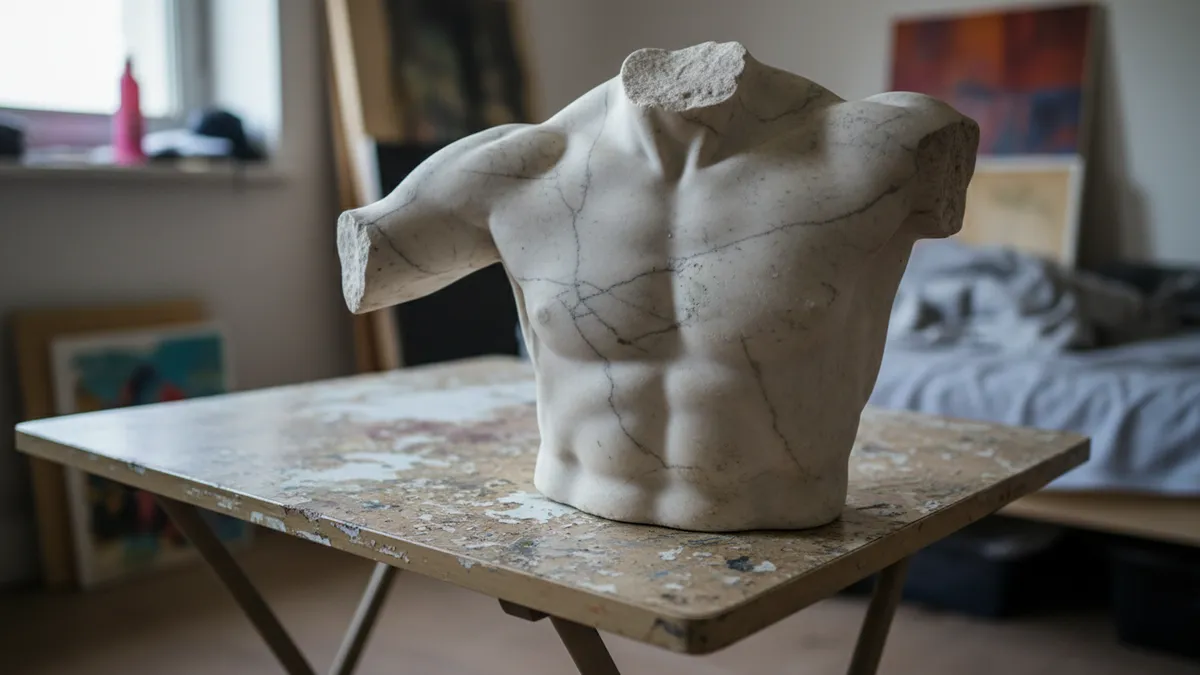
How to Turn Your Selfie Into a Viral AI Greek God Marble Statue Portrait in 2026: The Complete Guide to the Classical Sculpture Trend on TikTok and Instagram
It's 3 AM on a Tuesday in February 2026, and a personal trainer from Tulsa with 800 followers posts a side-by-side — his gym selfie on the left; on the right, himself reimagined as a seven-foot Carrara marble god, veins tracing his forearms like the work of Bernini's own chisel. By Friday he has 2.3 million views and brand deals sitting in his inbox like unopened mail. This is not an anomaly; this is the trend — and the barrier to entry is literally a selfie and five minutes of your time.
Let's be honest about what's happening here: the AI Greek statue filter is the most democratic form of self-mythology the internet has ever produced. You don't need a gym body, a ring light, or a professional photographer. You need a face, a prompt, and the willingness to see yourself carved from something eternal. That's it. And if you think this trend is just for fitness influencers flexing their deltoids — you're already behind.
Why the Classical Sculpture Aesthetic Took Over Your Feed
The AI marble statue trend didn't come out of nowhere — it sits at the intersection of three cultural currents that have been building for years; the stoic philosophy revival, the self-improvement movement's obsession with legacy and discipline, and the sheer visual power of classical art remixed through modern technology.
Think about what a Greek god AI portrait actually communicates. It says permanence. It says "I am not temporary." In an era of disappearing stories and 24-hour content cycles, turning yourself into something that looks like it belongs in the Louvre is a psychological counterpunch — and people feel it, even if they can't articulate why they double-tapped.
The masculinity and self-improvement communities on TikTok — the Marcus Aurelius quote accounts, the cold-plunge-at-dawn crowd — adopted this aesthetic first because it mapped perfectly onto their visual language. But here's what nobody's saying loud enough: women are driving the second wave just as hard. The Greek goddess AI photo trend is exploding with portrait styles inspired by Athena, Artemis, and Aphrodite — and the results are genuinely stunning in ways that make the male versions look almost restrained.
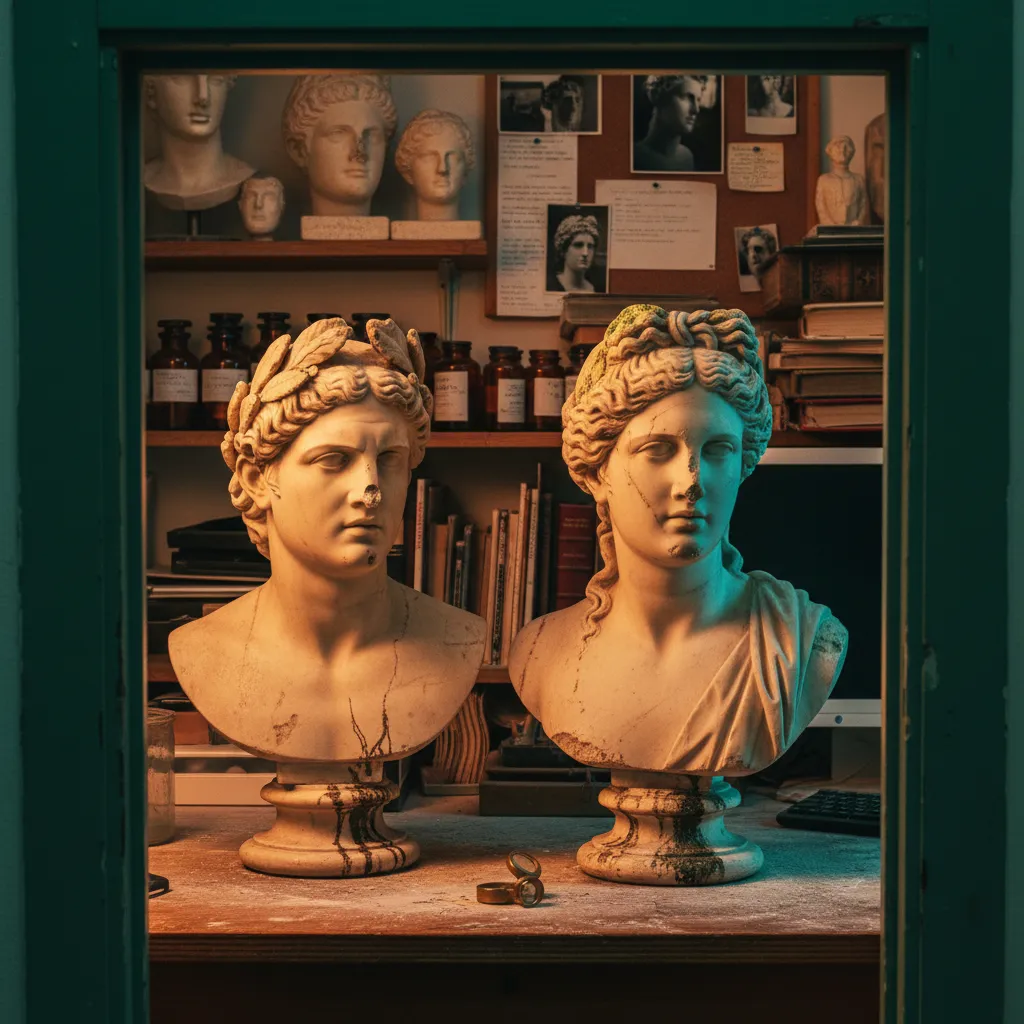
The Tools That Actually Work — and the Ones Wasting Your Time
Here's where I get blunt, because half the tutorials floating around right now are sending you on a 45-minute detour through tools that produce results looking like a PlayStation 2 cutscene.
ChatGPT (GPT-4o with DALL·E)
Still the most accessible option for most people. Upload your selfie directly into the chat, feed it a well-crafted prompt, and you'll get something genuinely impressive in under a minute. The texture rendering on marble has gotten remarkably good — you can see the translucency in the stone, the way light pools in the hollows of the cheekbones.
Gemini with Imagen 3
Google's entry is arguably producing the most photorealistic sculpture effects right now — the material accuracy on bronze and gold is leagues ahead of where it was six months ago. The catch is that it can be inconsistent with facial likeness; sometimes it nails you, sometimes it gives you a face that's adjacent to yours but clearly belongs to someone who made different life choices.
CapCut's AI Statue Effect
This is the gateway drug for TikTok creators who don't want to leave the app ecosystem. The marble sculpture AI filter built into CapCut is one-tap simplicity — upload, select the style, export. The results are less customizable but perfectly optimized for vertical video reveals, which is why 90% of the viral before-and-after transitions you've seen were made here.
PixViva
If what you actually want is a portrait that looks like it was commissioned — not generated — this is where the conversation changes. PixViva specializes in AI-generated portraits with a level of artistic control and output quality that the free tools simply aren't matching yet; we're talking about the difference between a filter and a finished piece. For the Greek statue aesthetic specifically, the ability to fine-tune material, lighting, and pose composition means you're not rolling the dice on whether the AI decides to give you a third nostril.
Prompts That Actually Produce Gallery-Worthy Results
The prompt is everything — and most people are writing prompts like they're ordering at a drive-through. "Make me look like a Greek statue" is doing the same work as telling a master sculptor "make it good, I guess." Here's what you should actually be feeding these tools.
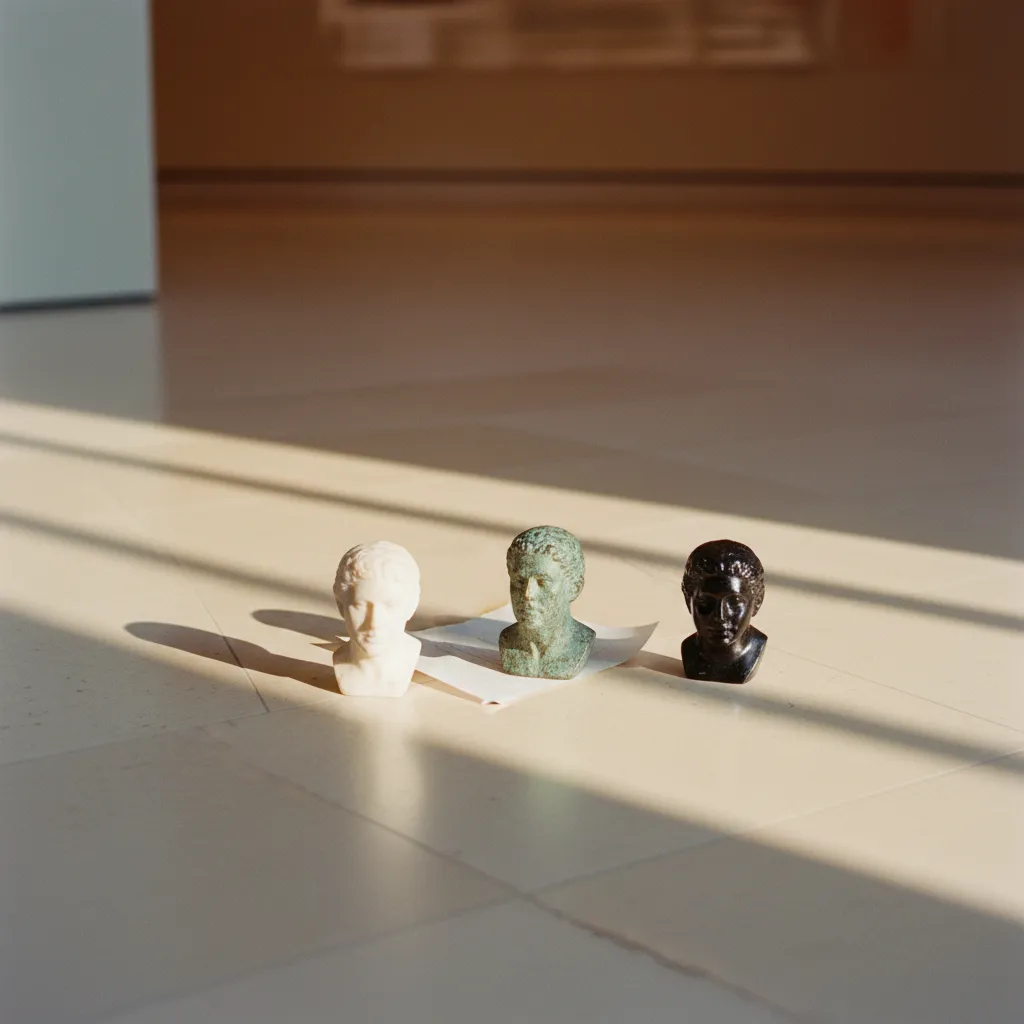
For White Carrara Marble
"Hyper-detailed classical Greek marble sculpture portrait of [describe subject], carved from pure white Carrara marble with subtle grey veining. Museum-quality, dramatic side lighting from upper left, shallow depth of field with dark museum background. Style of Hellenistic period sculpture — idealized but maintaining recognizable facial features. Micro-detail on hair texture carved in stone. No color, pure monochromatic white marble."
For Aged Bronze
"Classical bronze sculpture portrait bust of [describe subject] in the style of ancient Roman imperial portraiture. Dark patinated bronze with areas of green verdigris on the shoulders and temples. Warm museum spotlight from above, rich golden-brown tones in the metal. Highly detailed casting texture — visible in the hair and brow. Expression: stoic, commanding, timeless."
For Obsidian or Black Stone
"Monumental portrait sculpture of [describe subject] carved from polished black obsidian stone. Mirror-like reflective surfaces on the cheekbones and forehead contrasting with rough-hewn matte texture in the hair and beard area. Dramatic chiaroscuro lighting against pure black background. Style references: contemporary hyperrealist sculpture meets ancient Egyptian monumentalism."
For Gold (The Flex Option)
"Solid 24-karat gold sculptural portrait bust of [describe subject], museum pedestal display. Warm golden reflections, mirror-polished surfaces with fine tool marks visible on close inspection. Renaissance-inspired composition with contemporary facial features preserved. Lit by a single warm spotlight, dark gradient background. Opulent but tasteful — gallery not gaudy."
Pro tip that will save you from mediocre results: always include lighting direction, background context, and a specific art-historical reference period. The AI needs anchors — give it a museum to put you in, and it will light you like you belong there.
How to Nail the Before-and-After Reveal for Maximum Virality
The portrait itself is only half the content — the reveal format is what makes it spread. The videos pulling millions of views on TikTok and Instagram Reels follow a surprisingly rigid formula; deviate from it and you're leaving views on the table.
The Structure That Works
- Open on the raw selfie — unedited, maybe slightly unflattering. Authenticity here builds contrast.
- Text overlay or voiceover: something like "Fed my selfie to AI and asked it to immortalize me" — casual, not tryhard.
- Hard cut or smooth morph transition to the AI Greek statue portrait. This is the money shot. CapCut's keyframe morphing is the cleanest way to do this; align the eyes in both images and the transition practically edits itself.
- Hold on the statue for at least 3 full seconds. Let people screenshot. Let them stare. The comments section fills itself when the result is good.
- End with a second material variant — show the bronze or gold version as a bonus hit. Multiple outputs in one video dramatically increase watch time and saves.
Audio matters more than you think — the trending sounds attached to this format right now lean heavily into epic orchestral or slowed-down rap with bass that makes the reveal feel like a coronation. Search "statue reveal" in TikTok's sound library and sort by trending; the algorithm is literally telling you what to use.
Why This Trend Has Staying Power — and What's Coming Next
Most AI trends burn bright and disappear within a news cycle. The bodybuilding Greek statue AI crossover is different because it's tapping into something older than the internet — the human desire to be remembered, to be rendered in something that outlasts you. Every civilization that ever existed made statues of its heroes; we're just doing it with neural networks instead of hammers.
The self-improvement communities understand this intuitively — which is why the trend keeps regenerating instead of dying. Every new person who starts a fitness journey, reads their first Seneca quote, or decides to take themselves seriously for the first time discovers this aesthetic and feels seen by it. The pipeline refills itself.
What's coming next is animation. We're already seeing early experiments with AI statue portraits that slowly turn their heads, blink, or crack from marble to reveal the real person underneath — and the engagement numbers on those are absurd. The tools aren't quite mainstream yet, but by mid-2026, expect one-tap animated statue reveals to be as common as the still image versions are now.
Make It Yours — Seriously
Here's the thing nobody in the tutorial space wants to admit: the best AI Greek god portraits aren't the ones with the most detailed prompts or the most expensive tools — they're the ones where the person brought something real to the input image. A genuine expression. An angle that shows character rather than just symmetry. Confidence that existed before the marble was ever applied.
The AI statue effect from photo is a mirror that happens to be made of stone — and the best mirrors show you something you already knew was there but hadn't seen rendered this clearly. So take the selfie. Write the prompt. Try marble first, then bronze, then obsidian just because obsidian looks unbelievably dramatic and nobody's talking about it enough.
And if you want results that genuinely stop people mid-scroll — the kind that get screenshot-shared into group chats and saved for "I need to try this" later — PixViva's portrait tools are built for exactly that moment. Not a filter. A portrait. There's a difference; and you'll see it immediately.
Ready to see yourself in a new light?