
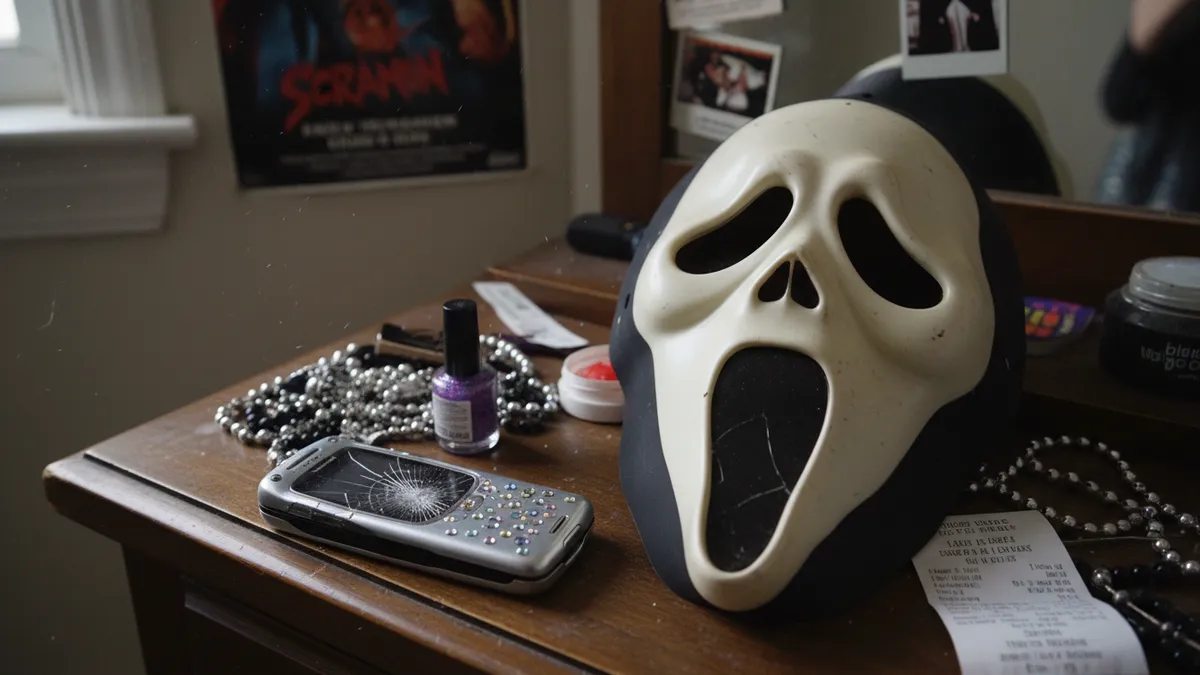
How to Turn Your Selfie Into a Viral AI Ghostface Y2K Scream Portrait in 2026: The Complete Guide to the 90s Horror-Meets-Glamour Trend on TikTok and Instagram
Here's the thing about viral trends. They don't wait.
The AI Ghostface Y2K Scream portrait trend is pulling individual TikToks past the one-million-view mark right now—not next month, not "soon." And the window where your version still feels fresh, still stops the scroll, still makes people screenshot and send to three friends? That window is — shrinking. Especially with Scream 7 hype building to a fever pitch in 2026 and every creator on the platform racing to nail their own version of 90s-horror-meets-glamour.
So let's talk about how to actually do this. And more importantly, how to do it in a way that doesn't look like everyone else's.
Why This Specific Trend Is Hitting So Hard
There's a pattern here if you know where to look.
The Ghostface AI selfie trend isn't just "horror filter goes viral." It's sitting at the exact intersection of three cultural currents that happen to be peaking simultaneously. Y2K nostalgia — the butterfly clips, the satin everything, the landline phones with curly cords — has been cycling through fashion and aesthetics for two years now. AI-generated portraits crossed from novelty into genuine creative tool territory. And Scream 7's marketing machine is pumping new energy into a franchise that Gen Z adopted as their own horror canon.
Three currents. One collision point. That's why these images feel like they belong in 2026 instead of feeling like a gimmick.
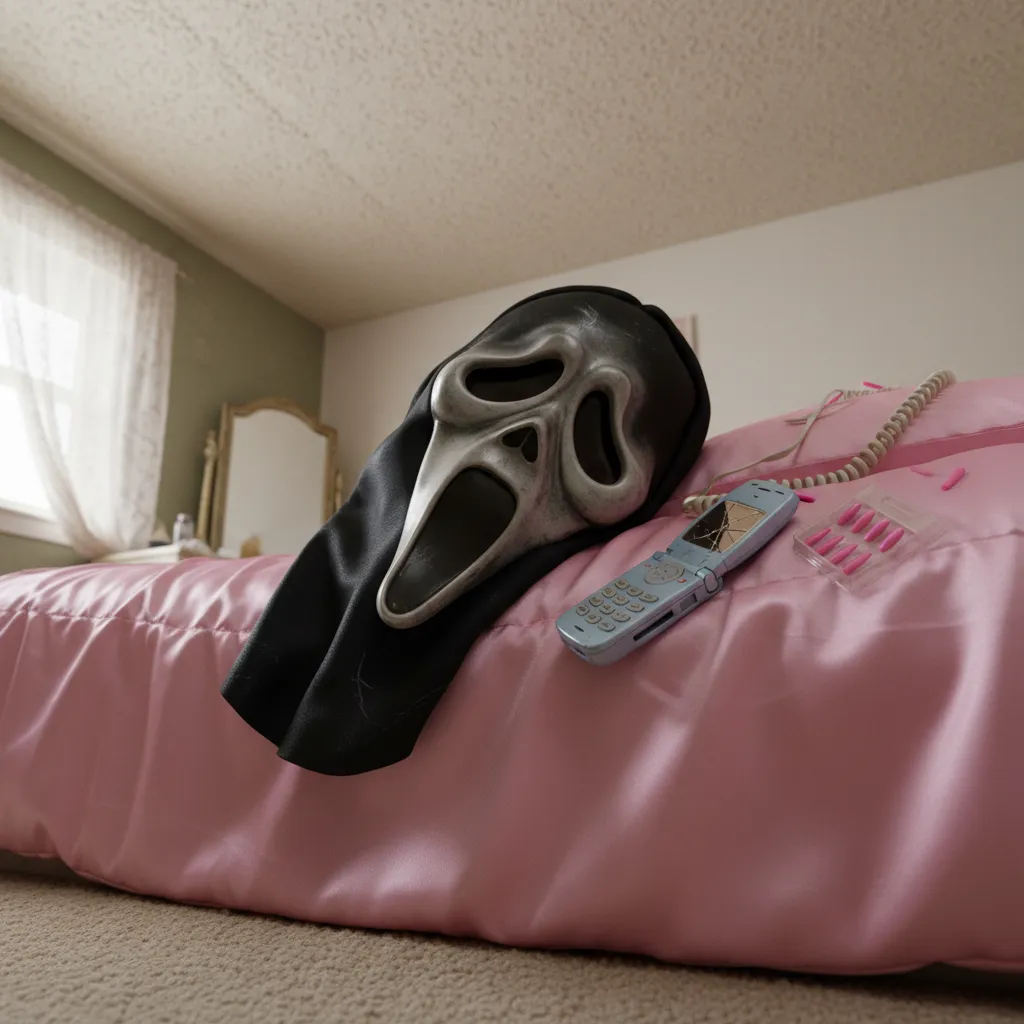
The typical version you've seen: someone's AI-generated self lounging in a pink Y2K bedroom. Satin sheets. Maybe a lava lamp glowing in the corner. And there — in the doorway, half-hidden, half-obvious — Ghostface. Knife catching the light.
It works because of the contrast. Soft glamour interrupted by menace. Your brain processes the cozy aesthetic first, then the threat registers. That delay. That double-take. That's the scroll-stopper.
The Default Prompt Problem (And How to Break Past It)
Here's where most people stop. They find a Ghostface Gemini prompt circulating on Twitter or TikTok, paste it in, upload a selfie, and post whatever comes back.
And look — that works. For the first five hundred people who did it.
But the algorithm rewards distinctiveness. The Scream AI photo trend has reached the stage where the pink bedroom version is becoming wallpaper. Your brain scrolls past it. You need a version that makes someone pause and think wait, that's different.
The system underneath is simple once you see it. Every viral version of this trend follows the same formula:
Your face + Y2K-coded environment + Ghostface as environmental threat + one unexpected detail
That last variable is where your version lives or dies.
Crafting Prompts That Actually Stand Out
Let's get specific. The AI horror selfie TikTok creators pulling massive numbers aren't using the stock prompt anymore. They're customizing three elements: setting, lighting mood, and the "wrong detail" that makes the image feel like a frame from a movie you half-remember.
Beyond the Bedroom — Scene Ideas That Hit
The school hallway. Lockers in that specific shade of institutional teal. You're mid-stride, maybe carrying a clear backpack — peak Y2K — and Ghostface is at the far end of the corridor. The fluorescent lighting does all the heavy lifting here. Something about institutional spaces plus horror plus nostalgia triggers a very specific unease.
The beach house at golden hour. This one's underused and it's criminal. Think wood-paneled walls, a surfboard leaning in the corner, orange light pouring through salt-crusted windows. Ghostface reflected in a sliding glass door. The warmth of the scene makes the threat feel more invasive.
Holiday horror mashups. Christmas lights tangled around a Y2K-era living room. Halloween — obviously. But also prom night. New Year's Eve 1999, specifically. The millennium anxiety angle practically writes its own caption.
The sleepover scene. Sleeping bags on the floor, a TV playing static, popcorn bowls, someone's flip phone on the carpet. Ghostface visible through a window behind the group. This one works especially well as a friend-group collaboration — everyone generates their own version of the same sleepover.
The Prompt Structure That Works
When you're building a Ghostface AI trend tutorial for yourself, think in layers:
- Subject direction — Describe yourself or reference your uploaded photo. Mention expression and pose. "Looking over shoulder, mid-laugh" reads differently than "staring directly at camera."
- Environment with era-specific details — Don't just say "90s room." Say "late-90s bedroom with a bead curtain doorway, CRT television showing a paused VHS menu screen, pink fur rug."
- Ghostface placement and behavior — "Ghostface partially visible in the hallway mirror" is more cinematic than "Ghostface standing behind me." Give the threat spatial logic.
- Lighting and film quality — This matters more than people think. "Shot on 35mm film with slight grain, warm tungsten lighting with one cool shadow" will produce something that feels authored. Intentional.
- The wrong detail — A phone off the hook. A door that shouldn't be open. A second shadow. This is your signature.
Getting the Technical Side Right
The Scream AI photo trend runs across several platforms and tools, but the quality gap between a quick generation and a portrait you'd actually want on your grid — that gap is real.
Upload quality matters enormously. The AI needs clear facial features, good lighting on your face, and enough resolution to work with. A grainy front-camera selfie taken in dim bathroom light will give you a grainy, unconvincing result. Garbage in, garbage out. That principle hasn't changed.
This is where a tool like PixViva becomes genuinely useful — not as a novelty but as infrastructure. When your source portrait is already optimized, already lit well, already capturing your features at their sharpest, the AI generation built on top of it performs at a completely different level. Think of it as giving the AI better clay to sculpt with.
Timing Your Post for Maximum Impact
Pattern recognition again. The Scream 7 AI photo wave is going to crest in phases:
Phase one — now. Early adopters are posting creative versions. The algorithm is still rewarding novelty within the trend. This is where custom scenes (the hallway, the beach house, the holiday mashup) have the most impact.
Phase two — trailer drops and press cycles. Every Scream 7 trailer, poster reveal, or cast interview will re-spike interest. Having your Ghostface AI selfie ready to repost or remix when these moments hit is free momentum.
Phase three — release week. The absolute peak. Everyone will be posting. Standing out here requires either the best execution or the most creative concept. Ideally both.
Posting now with a custom scene and then re-engaging during phase two with a remix? That's the play. The algorithm remembers creators who were early.
Making It Yours — The Detail That Changes Everything
I keep coming back to this because it's the actual mechanism underneath the trend.
The Y2K AI portrait that gets saved, shared, sent in group chats — it has a story embedded in it. Not a story you explain in the caption. A story the image tells on its own.
Maybe it's the way your character in the scene seems completely unaware of Ghostface. The dramatic irony of you doing your makeup in a vanity mirror while the shape stands behind you — and you can see it in the mirror but your character can't. That tension.
Maybe it's humor. Ghostface holding a pizza box instead of a knife. Ghostface on hold with the corded phone. Genre subversion works just as well as genre faithfulness here because the original Scream movies understood — comedy and horror share a circulatory system.
Maybe it's personalization so specific it becomes universal. Your actual bedroom aesthetic recreated in AI. Your college campus. Your city skyline through the window. When someone recognizes the specificity, the image transcends trend and becomes yours.
The Trend Is a Canvas, Not a Template
Here's what I want you to walk away with.
The Ghostface AI trend tutorial you find on TikTok will give you the template. Pink room. Ghostface. Post. And that's fine — that's the entry point. But the creators eating right now on this trend are the ones who understood that the template is just the starting grammar of a much larger creative language.
Customize the scene. Nail the lighting direction. Add the wrong detail. Time your posts to the Scream 7 publicity cycle. And start with the highest-quality portrait you can — because every AI generation is only as good as what you feed it.
The trend is live. The window is open. And Ghostface, as always — is already in the house.
Ready to see yourself in a new light?