
How to Turn Your Selfie Into a Viral AI Funko Pop Vinyl Figure Portrait in 2026: The Complete Guide to the Big-Head Collectible Trend on TikTok and Instagram
Your phone buzzes. The notification reads 247 likes in twenty minutes. You open Instagram and there it is — your face rendered as a glossy vinyl collectible, perched inside a window box with your name in that unmistakable white typeface. The oversized head, the beady black eyes, the slightly smug grin molded into polymer sheen. Your aunt thinks you actually got a custom figure made. Your coworker wants one. The comments are a wall of "HOW."
That future is about thirty minutes away. Here's how you get there.
The AI Funko Pop selfie trend is not a novelty filter. It sits at the collision point of a billion-dollar collectible brand, a 50-million-strong collector community, and generative AI that finally understands what vinyl texture looks like under studio lighting. This guide covers every angle — from the anatomy of the Funko aesthetic to the exact prompts that nail it, to building that iconic retail packaging around your portrait.
Why Funko Pop Specifically — and Why Now
The internet has been turning people into action figures for months. Boxed portraits, toy-shelf renders, Barbie-style packaging. But the AI Funko Pop trend is a different animal. It feeds on one of the most recognizable silhouettes in modern merchandising.
Think of it like architecture. A generic skyscraper blends into any skyline. But the Sydney Opera House? You know it from a thumbnail. Funko Pops work the same way. That 3:1 head-to-body ratio, those dot eyes, the stubby cylindrical legs — it's a visual shorthand that fires instant recognition. When someone scrolls past your AI Funko Pop portrait on TikTok, they don't need context. They just get it.
Funko has shipped over 200 million figures. The brand crossed $1 billion in lifetime revenue. The collector community is ravenous, organized, and extremely online. When you create an AI Funko Pop selfie, you're not just riding a trend. You're tapping into an existing cultural obsession with deep emotional roots.
The Anatomy of a Convincing Funko Pop Portrait
Before you touch a single AI tool, you need to understand what you're building. A great chef doesn't just follow the recipe — they understand how heat transfers through a copper pan. Same principle here. Know the aesthetic, then command the AI.
The Head
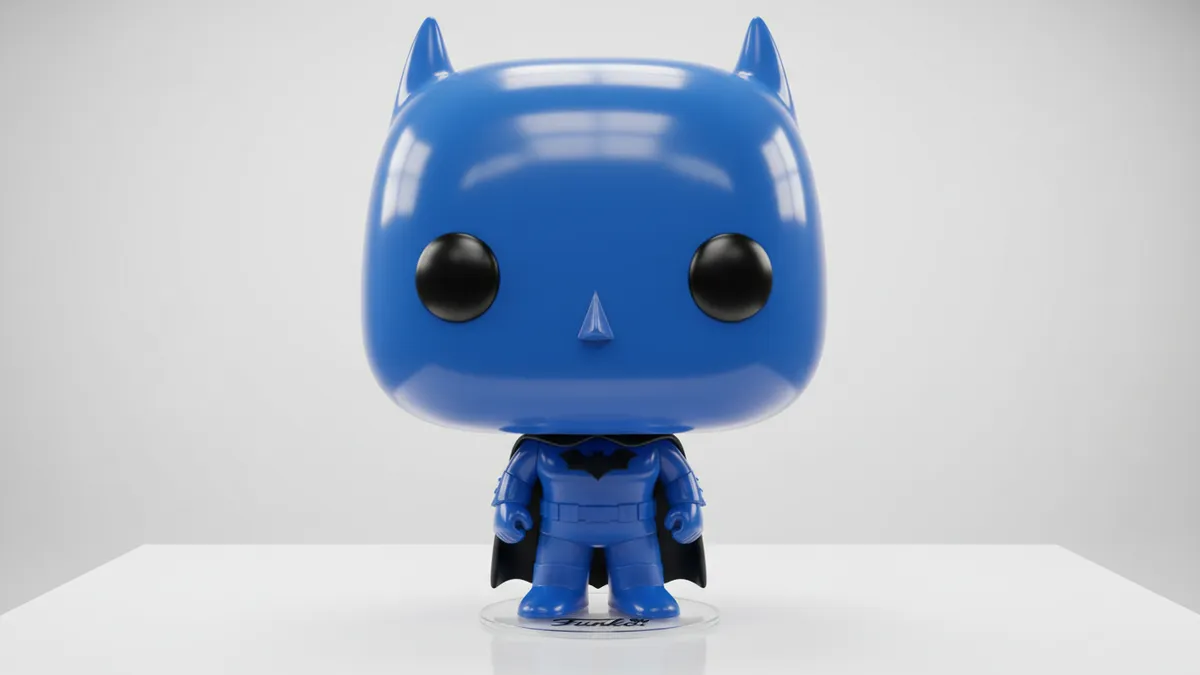
Funko Pops use roughly a 3:1 head-to-body ratio. Not 2:1 like a chibi character. Not 4:1 like a bobblehead toy. That specific proportion is what separates a "cute cartoon" from a Funko. The head is a smooth, slightly flattened sphere. No sharp jawlines. No angular cheekbones. Everything rounds off.
The Eyes
This is the detail that makes or breaks your result. Funko eyes are small, round, solid black dots — no irises, no whites, no reflections. Some figures add tiny painted eyebrows. Most don't. The AI Funko Pop trend lives and dies on getting these eyes right. If your result has anime eyes or Disney sparkle, it's not Funko.
The Texture
Real Funko Pops are injection-molded vinyl. They have a specific matte-to-semi-gloss surface with visible paint application. The skin isn't realistic skin. It's painted plastic that catches light in flat planes. Prompting for "vinyl toy texture" or "painted collectible figure" pushes AI in the right direction.
The Body
Small. Simple. Squared-off shoulders, minimal articulation, hands that are rounded nubs or hold a single prop. The body exists to support the head and communicate identity through clothing and accessories — not through anatomical detail.
Crafting Your ChatGPT Funko Pop Prompt
The difference between a mediocre result and a scroll-stopping one lives in prompt specificity. Vague prompts produce vague outputs. Here's the framework.
The Core Prompt Structure
Start with the subject, then the style, then the technical details, then the environment. Layer information like a painter building from background to foreground.
A strong ChatGPT Funko Pop prompt looks something like this:
"A vinyl Funko Pop collectible figure of [your description]. Oversized rounded head with small solid black dot eyes, no mouth detail, painted-on features. Smooth semi-gloss vinyl plastic texture. Small compact body with [outfit description]. Standing on a round black Funko-style base. Studio product photography lighting against a clean background."
That skeleton works. Now customize it.
Details That Sell the Illusion
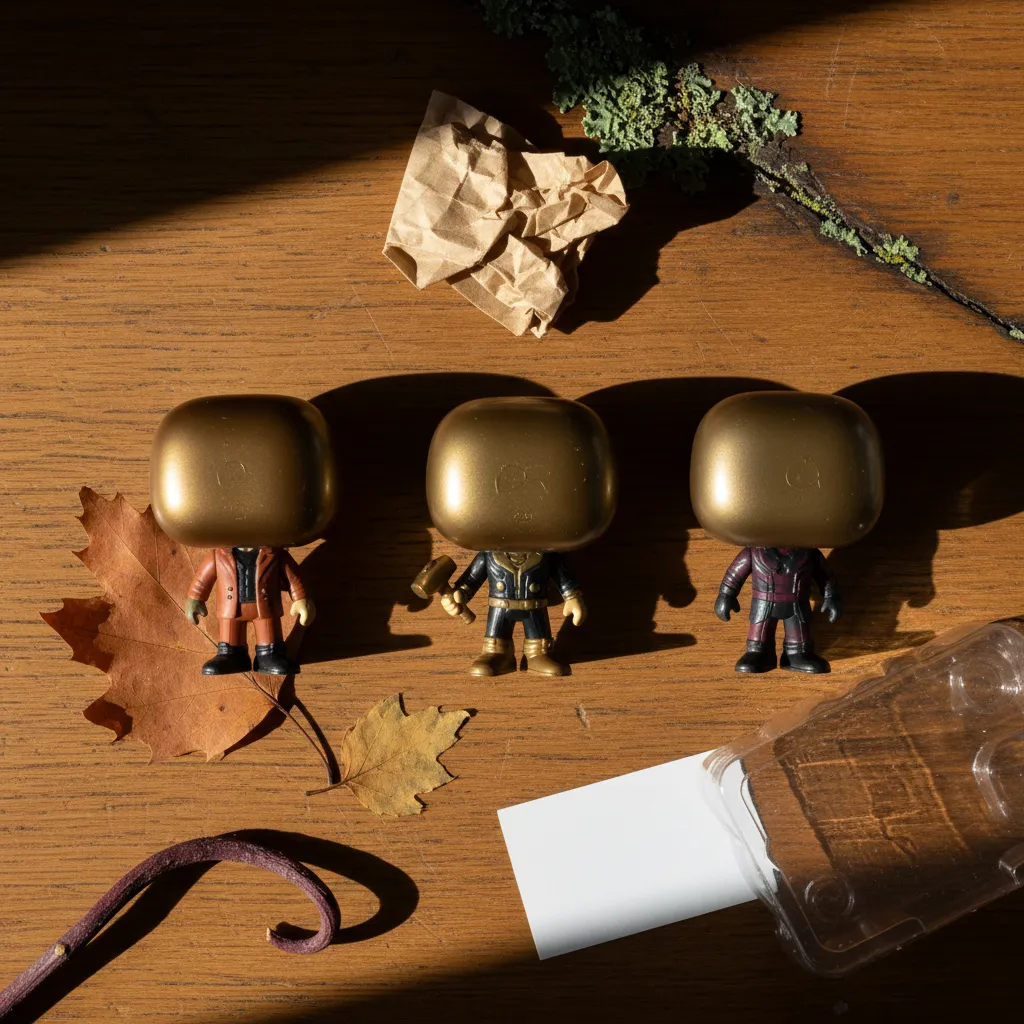
Add your hair color and style, described as "molded and painted." Mention specific clothing — a leather jacket, a lab coat, a hoodie — but describe it as "sculpted vinyl with painted details." Include one signature accessory. A coffee mug. A camera. A guitar. Funko figures almost always hold something.
Describe the lighting as "soft product photography" or "studio packshot." This steers the AI away from dramatic cinematic renders and toward the flat, commercial look of an actual collectible photo.
What to Avoid in Your Prompt
Don't ask for realistic eyes. Don't request "detailed facial features." Don't mention "photorealistic skin." Every one of these pulls the AI away from the Funko aesthetic and toward uncanny territory. You want less facial detail, not more. Think subtraction. The sculptor removes marble to find the figure inside.
The Window-Box Packaging That Seals the Deal
Here's where the AI Funko Pop trend separates from every other toy-style portrait trend. The packaging is half the magic.
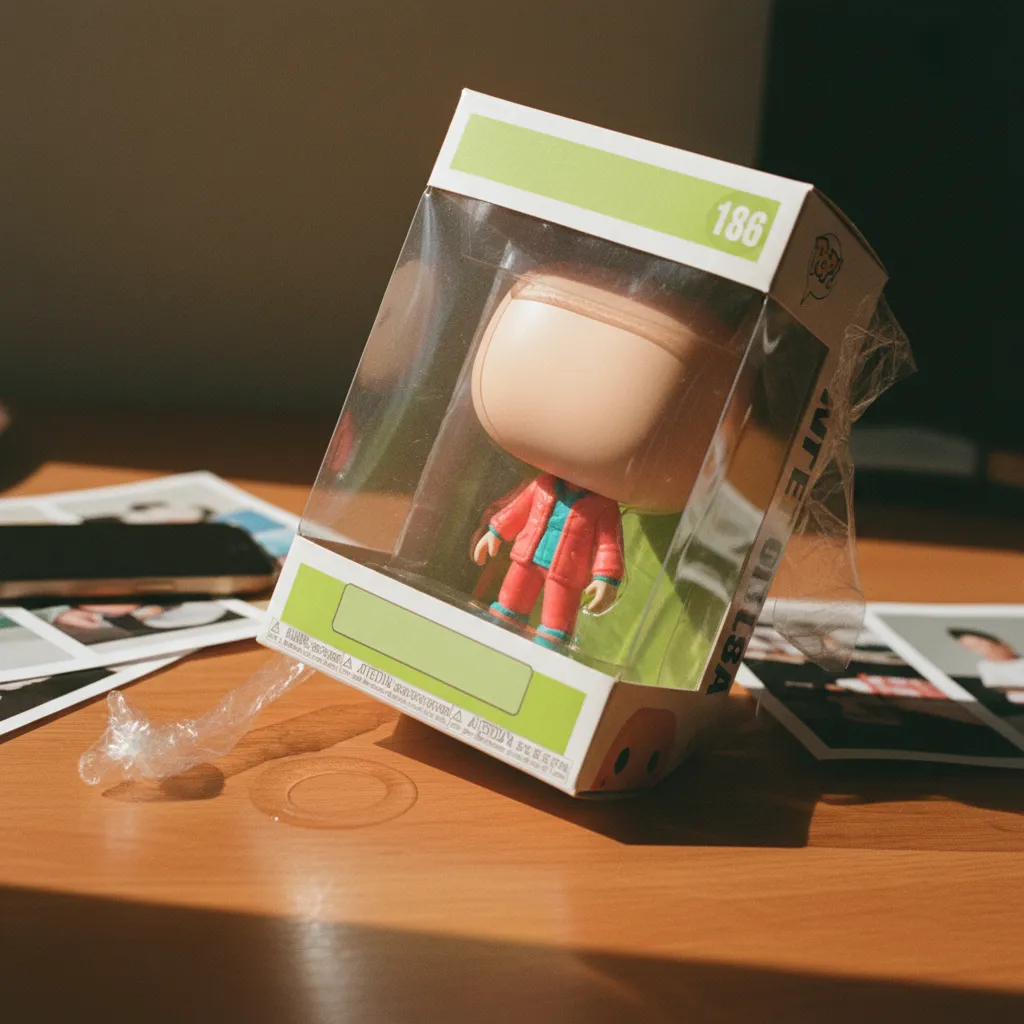
Real Funko Pop boxes follow a precise template. A rectangular window showing the figure. Bold color blocking behind the figure. The character name in clean white text on a banner at the bottom. A number designation in the corner. The brand logo up top.
To generate the window-box packaging with your name on it, add this to your prompt:
"Displayed inside official-style collectible toy packaging with a clear front window. Bold [color] cardboard box. Character name '[YOUR NAME]' printed on the bottom banner in clean white sans-serif font. Number '#001' in the corner. Clean retail shelf appearance."
The packaging transforms your result from "cool AI art" into "something I need to share immediately." It's the same psychology that makes unboxing videos addictive. Packaging implies scarcity. It implies value. It implies that you are the limited edition.
Choosing Your Starting Photo
Garbage in, treasure out is not how this works. Your source selfie matters.
Use a well-lit, front-facing photo. Even lighting beats dramatic shadows — remember, you're targeting a product photography aesthetic. A clean background helps but isn't mandatory since the AI will replace the environment. Avoid heavy filters on your source image. The AI needs to read your features accurately before it can stylize them.
At PixViva, we've seen this pattern across every AI portrait trend. The quality of your starting image sets the ceiling for your output. A sharp, naturally lit headshot gives the AI the clearest possible blueprint. If your selfie game already lives on PixViva-level quality, you're starting with an advantage.
Platform-Specific Moves for TikTok and Instagram
Creating the image is step one. Making it travel is step two.
TikTok: The Reveal Format
The AI Funko Pop trend on TikTok thrives on the before-and-after reveal. Film yourself holding your phone with the original selfie visible. Cut to the Funko Pop result. Use a trending sound — the "unboxing" audio clips work perfectly. Add text overlay: "POV: You turned yourself into a Funko Pop."
Timing matters. Post between 7–9 PM in your timezone on Tuesday through Thursday. The TikTok algorithm rewards early engagement velocity, so reply to every comment in the first hour.
Instagram: The Carousel Play
Instagram rewards saves and shares over raw likes. Build a carousel: slide one is the finished Funko Pop in its box, slide two is a close-up of the vinyl texture and details, slide three is the original selfie. Curiosity pulls people through the carousel. Each swipe signals engagement to the algorithm.
Use the hashtag cluster: #AIFunkoPop #FunkoPop #CustomFunko #AIart #FunkoPopAI. Tag the official Funko account. Collectors monitor those tags like hawks watching a field.
Common Mistakes and How to Fix Them
The eyes are too detailed. Explicitly add "small solid black dot eyes, no iris, no eye whites" to your prompt. Repeat it if needed. This is the single most common failure.
The proportions look like a Bratz doll. Specify "3:1 head to body ratio" and "compact stubby body" to lock in the Funko silhouette.
The texture reads as clay or rubber. Add "injection-molded vinyl plastic" and "semi-gloss painted surface." Vinyl has a specific light response that differs from clay or silicone.
The packaging text is gibberish. AI still struggles with text rendering. If your name comes out garbled, generate the figure and packaging separately, then composite the text in any basic editor. Five minutes of cleanup beats a dozen re-generations.
Why This Trend Has Staying Power
Most AI portrait trends flame out in two weeks. The Funko Pop filter trend in 2026 has a longer runway. Here's why.
Funko releases new figures constantly — every movie, TV show, musician, and sports star gets one. The collector community has a built-in habit of sharing, comparing, and ranking figures. When you turn your photo into a Funko Pop, you're inserting yourself into an active, passionate conversation that existed long before AI entered the picture.
It's the same reason sports jerseys outsell generic athletic wear. People don't just want a shirt. They want belonging. A Funko Pop version of yourself says: I matter enough to be collectible.
Your Move
You now have the anatomy, the prompts, the packaging formula, and the platform strategy. The difference between the person who reads this and the person who goes viral is exactly one action: opening the tool and generating the first version.
Start with your best-lit selfie. Use the prompt framework above. Tweak the outfit and accessories until the figure feels unmistakably you. Add the window box. Post the reveal.
The trend is peaking right now. The collector community is watching. Your limited-edition self is waiting to be unboxed.
Ready to see yourself in a new light?