
How to Turn Your Selfie Into a Viral AI Marvel & DC Superhero Portrait in 2026: The Complete Guide to the Comic Book Hero Transformation Trend on TikTok and Instagram
Every great casting call starts the same way — someone looks at you and decides whether you belong in the frame. Except in 2026, the casting director is an AI, the audition tape is your selfie, and the role is whatever Marvel or DC character lives rent-free in your imagination. The selfie-to-superhero-AI trend has detonated across TikTok and Instagram like a gamma bomb in downtown Manhattan; millions of users are uploading casual phone photos and getting back fully realized comic book portraits that look like they were pulled from a variant cover at San Diego Comic-Con. This isn't a gimmick filter that slaps a cartoon overlay on your face — it's an AI superhero portrait generator that genuinely reimagines your features inside the visual language of billion-dollar franchises, and the results are so convincing they've sparked a legitimate identity fantasy movement online.
Why the AI Superhero Portrait Trend Exploded in 2026
Think of it like karaoke for your ego — except instead of butchering a Beyoncé song in front of strangers, you're stepping into vibranium armor in front of your entire follower count. The cultural timing is almost suspiciously perfect; with new MCU phases dropping trailers monthly and DC's rebooted cinematic universe generating fresh hype cycles, superhero aesthetics are saturating the visual internet at a level we haven't seen since the Endgame era. The AI superhero photo generator trend tapped directly into that saturation — giving fans a way to stop watching the fantasy and start inhabiting it.
What makes this wave different from the AI portrait crazes of 2023 and 2024 is specificity. Early AI art trends gave you "a painting of yourself in the style of Renaissance masters" — beautiful, sure, but emotionally vague. The Marvel portrait AI trend in 2026 lets you choose your franchise, your character archetype, your costume era, your entire narrative identity; it's the difference between trying on a generic suit and getting fitted for Tony Stark's Mark LXXXV armor. That precision is rocket fuel for engagement, because every output tells a story about who you want to be — and identity fantasy content is the most shareable currency on the pop culture internet.
Choosing Your Franchise Aesthetic: Marvel vs. DC vs. Spider-Verse
Here's where the fun stops being passive and starts being genuinely creative — because the franchise you choose isn't just a filter setting; it's a whole visual philosophy. Marvel's cinematic aesthetic leans into photorealistic metal textures, holographic HUDs, and that signature warm-gold-meets-cool-blue color grading that makes every hero look like they're standing in the golden hour of a battlefield. DC's visual DNA runs darker, more gothic, with deeper shadows and a palette that favors midnight blues, blood reds, and the kind of dramatic backlighting that turns a portrait into a movie poster.
And then there's the Spider-Verse aesthetic — which deserves its own paragraph because it changed everything. The comic book portrait from selfie trend owes an enormous debt to the Ben Day dots, the halftone textures, the visible ink lines, and the frame-breaking panel energy of Across the Spider-Verse; when you generate a portrait in this style, you don't just look like a superhero — you look like a superhero ripped from a page that's still vibrating with kinetic energy. It's the most visually distinctive option, and unsurprisingly, it tends to perform best on TikTok where bold graphics cut through the scroll.
How to Actually Generate Your AI Superhero Portrait (Step by Step)
The process is simpler than assembling IKEA furniture and infinitely more rewarding — which, admittedly, is a low bar, but the point stands. Here's how to go from selfie to superhero AI portrait in minutes rather than hours.
Pick Your Source Photo Wisely
Your selfie is the raw material, and like any raw material, quality matters — but not in the way you think. You don't need professional lighting or a DSLR; you need a clear, well-lit face with minimal obstruction. Skip the sunglasses, ditch the heavy Snapchat filters, and avoid group shots where the AI has to guess which face is auditioning for the Avengers. A straight-on or slight three-quarter angle works best; think "confident headshot energy" rather than "caught mid-sneeze at brunch."
Choose Your Hero (or Villain) Identity
This is the casting call moment — and honestly, the villain arc portraits tend to outperform hero ones on social media because everyone secretly wants to see themselves with Magneto's helmet or Harley Quinn's chaotic energy. With tools like PixViva's AI portrait generator, you're not locked into a single preset; you can specify the character archetype, the costume details, the era of the comics you want to reference. Want the gritty Frank Miller version of yourself? The neon-soaked Guardians of the Galaxy cosmic palette? The brooding Nolanverse realism? That specificity is what separates a forgettable output from one that makes your followers stop scrolling and start screenshotting.
Generate, Iterate, and Refine
First outputs are like first drafts — good enough to see the potential, rarely good enough to post. The superhero selfie trend TikTok creators who go viral almost always run multiple generations, tweaking the prompt language or swapping reference styles until the AI nails that uncanny sweet spot where you are clearly recognizable but the superhero costume, lighting, and composition feel pulled from a $200-million production. Don't settle on the first render; treat the process like a fitting — because the version that makes you whisper "oh, that's the one" is worth the extra three minutes.
The Team Ensemble Portrait: Assemble Your Own Squad
Here's where this trend levels up from individual flex to genuinely social content — and it's the angle most guides completely ignore. The AI hero costume portrait works beautifully as a solo piece, but the posts that generate the most engagement in 2026 are ensemble compositions where friend groups, couples, or entire families generate coordinated superhero team portraits. Imagine your group chat reimagined as an Avengers lineup, or your college roommates rendered as a Suicide Squad roster — each person's portrait matched in style, color grading, and composition so they look like a cohesive team poster.
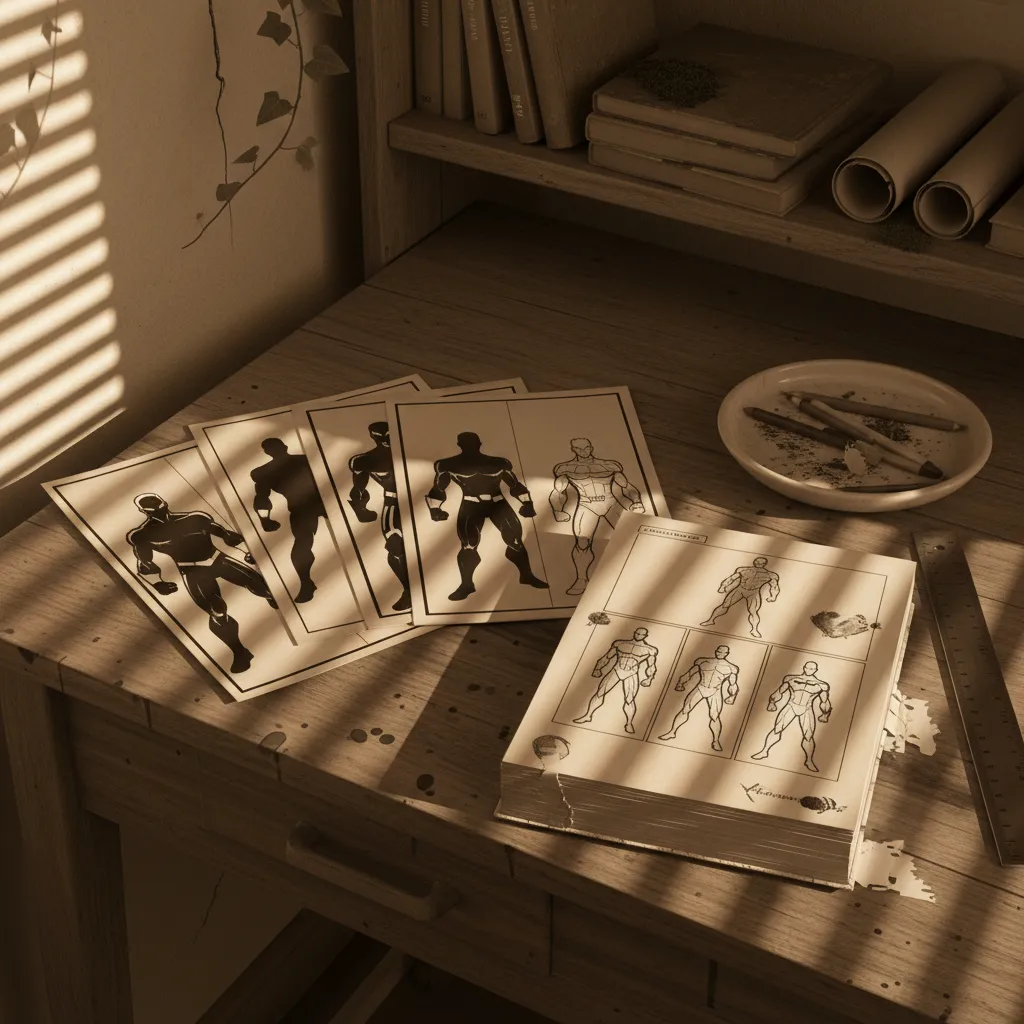
The logistics are straightforward: each person submits their selfie, chooses their character archetype, and the outputs get generated within the same franchise aesthetic so the visual language is consistent. PixViva makes this particularly seamless because you can maintain stylistic coherence across multiple portraits — same lighting direction, same level of comic book stylization, same universe. The result looks intentional rather than cobbled together, and it gives every person in the group a reason to share the image on their own feed; that's organic reach multiplication, which is the holy grail of social content strategy.
What Makes a Superhero Portrait Go Viral (Not Just Look Cool)
There's a meaningful gap between a portrait that impresses your friends and one that escapes your immediate circle to rack up six-figure views — and that gap is almost entirely about narrative tension. The DC superhero transformation filter posts that blow up always contain an element of surprise or contrast; a grandma rendered as a terrifying Darkseid, a golden retriever in Green Lantern armor, a toddler looking more convincing as Batman than Ben Affleck. The humor, the unexpectedness, the "I did NOT see that coming" factor — that's the algorithm's favorite flavor.
Format matters too. The most effective structure on TikTok is the before-and-after reveal — hold the original selfie for two seconds with a trending sound building tension, then hard-cut to the AI superhero portrait at the beat drop. It's formulaic in the best possible way; the pattern is familiar enough that viewers know what's coming, but the specific output is unique enough to deliver genuine delight every time. Pair that with a caption that leans into the identity fantasy — "The multiverse where I got the call" or "POV: Kevin Feige finally sees your potential" — and you've got content that practically begs to be dueted and stitched.
Picking Your Side: Hero Arc vs. Villain Arc Portraits
Let's be honest — the villain portraits hit different, and the engagement data backs this up. Hero portraits are aspirational and clean; villain portraits are interesting. There's a psychological richness to seeing yourself rendered with Thanos-level gravitas or Catwoman's morally ambiguous smirk that simply generates more comments, more debates, more saves. The AI superhero portrait selfie trend has quietly revealed something the comic book industry has known for decades: people are more fascinated by what they'd do with unlimited power than by the noble restraint of using it responsibly.
That said, the smartest creators alternate — posting a hero version one week and a villain variant the next, essentially building a personal multiverse that keeps their audience guessing and coming back. It's serialized content disguised as a trend, and it works because the emotional core never changes: what if I were the main character?
Your Superhero Era Starts With One Selfie
The beautiful absurdity of this entire trend is that it democratizes a fantasy that used to require a Hollywood budget, a personal trainer, and Chris Hemsworth's genetics. In 2026, your phone camera and an AI superhero photo generator are the only prerequisites — the technology handles the vibranium, the cape physics, and the dramatic lighting while you handle the most important ingredient: the face that makes the character yours. Whether you're building a solo portrait for your dating profile, assembling an ensemble poster with your friend group, or crafting a villain-arc series for your TikTok audience, the tools are here, they're accessible, and the trend shows zero signs of losing momentum.
So audition. Pick your franchise, choose your side, upload the selfie — and let the AI show you the version of yourself that belongs on a variant cover. PixViva is ready when you are; the multiverse just needs your face.
Ready to see yourself in a new light?